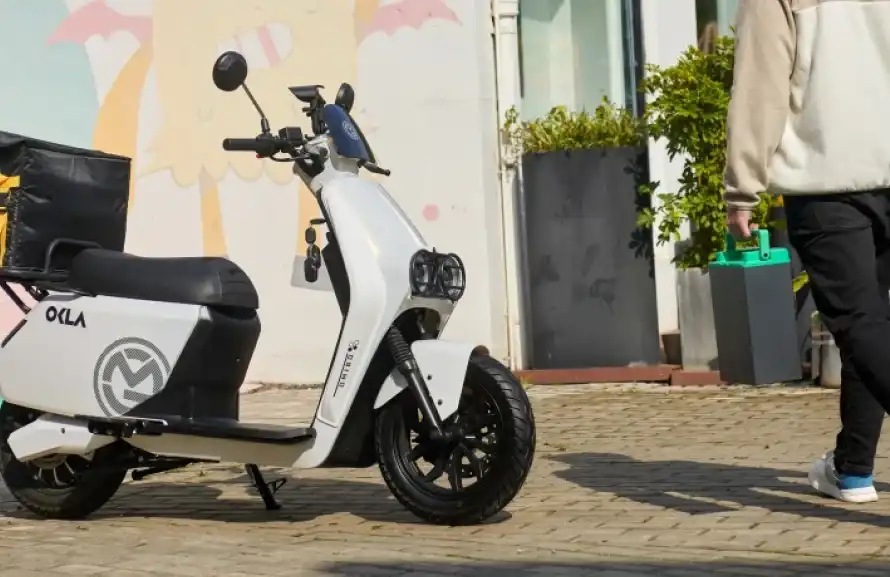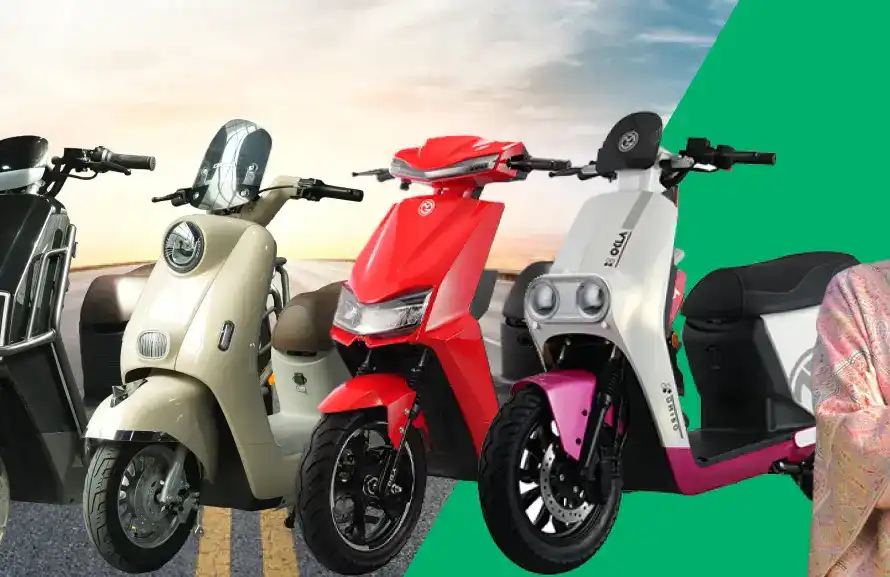
From the busy streets of Karachi to the busy city life in Lahore, we can see that there is a spike in electric mobility. With petrol prices rising, combined with the consumer public perception of clean energy becoming prominent, electric bikes and cars are on the minds of many consumers and businesses. One question that resonates far and wide as we make that transition to electric with bikes, scooters, etc., is, “How do you extend my EV battery?”
From electric vehicles, cars, and OKLA scooters, there is no doubt that understanding practices around battery care and charging can be a vital practice to ensure they last and perform efficiently for years to come.
Why Maintaining E-Bikes Battery Health is Important?
The EV battery is the beating heart of your EV, is also typically the most expensive to replace. Economists have estimated that transport contributes about 31% of total carbon emissions in Pakistan. The shift to electric vehicles in urban and rural areas is necessary to ensure sustainable improvement in air quality. EV bikes’ battery health matters to maintain the drive performance range and charging habits, and the lifecycle of the lithium-ion battery; without consideration, consumers will be at risk of their battery degrading too quickly.
Pakistan’s hot weather, inconsistent voltage, and some of the locations to charge your bikes, vehicles, scooters, etc., don’t allow for the best environment to maintain battery health, so practicing good battery care habits and similar habits will be paramount to extending battery life and EV bike or vehicle performance.
The Current Situation for E-Bikes in Pakistan
Pakistan’s National Electric Vehicle Policy 2026 targets the electrification of 30% of new vehicles by 2030. Major cities (specifically Lahore, Karachi, and Islamabad) are witnessing the development of a wider network of EV charging spots, alongside the addition of smart chargers to various locations.
| City | Specific Activities | EV Charging |
|---|---|---|
| Lahore | Perks of e-bikes and EVs | Home charging adapters |
| Karachi | Private sector EV fleets | Open-access to public fast charge stations |
| Islamabad | Fast Charger, early adopter | Initiatives supported by the government |
Still today, the majority of EV owners in Pakistan charge their vehicles at home, especially for e-bikes and e-scooters, which use a much smaller lithium-ion battery.
Step-By-Step Charging for an E-Bike in Pakistan
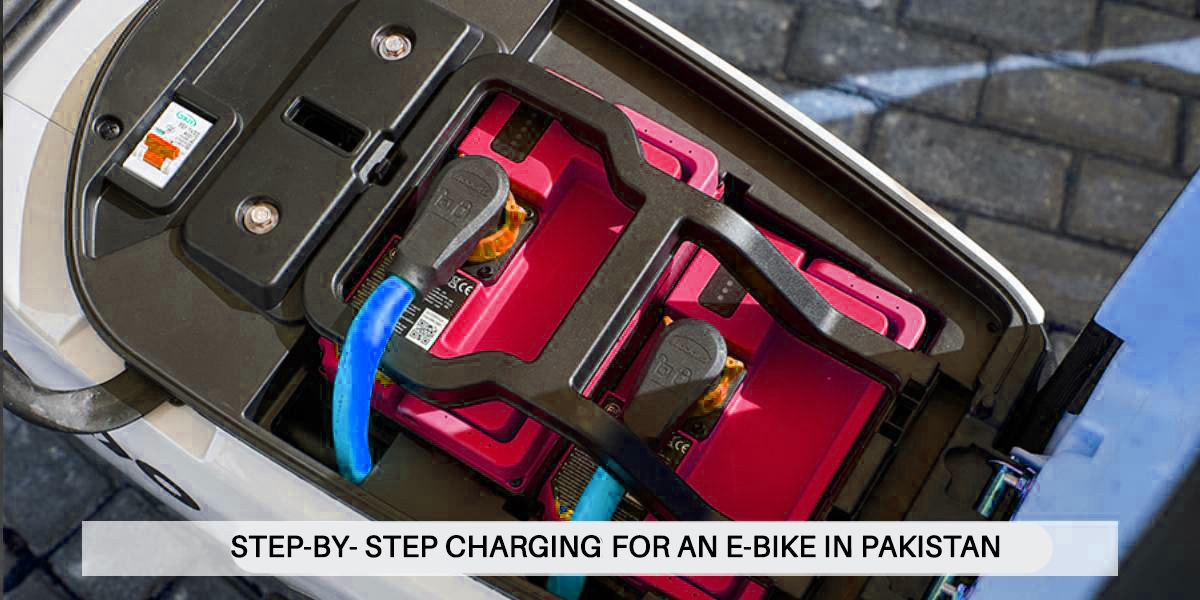
Charging your e-bike may seem like a straightforward task, but if you follow the process correctly, you can improve the battery life and achieve savings from not ruining it. This is a basic step-by-step guide if you live in Pakistan:
Step 1: Use the Original Charger
The voltage of standard e-bikes is 36V, 48V, and 52V, and the charging current is suggested based on the type of charger. The output wattage will vary based on charging speed and voltage, typically ranging from 80 watts to over 350 watts.
Always use the charger that comes from the battery manufacturer (this is recommended by the OKLA battery maintenance guide). Using a locally produced charger, especially one sold for a much lower price, can overheat the battery, change the voltage, or cause a short circuit, etc., especially in regions with inconsistent electricity supply.
Step 2: Select the Appropriate Charging Location
Charging must always be done in suitable ventilation. Lithium-ion batteries produce heat while charging. Do not charge in the rain or a damp environment.
Step 3: Charge at Moderate Battery Levels
You should never wait for the battery to be at 0! Try to charge the battery when it is in the range of 20-30%. In addition, do not charge your battery higher than 80-90%, unless you are on a long trip. This will help with battery degradation and consistent storage voltage.
Step 4: Keep an Eye on Charge Time
Usually, the charging time for electric bikes in Pakistan is between 4 and 6 hours. This will vary depending on battery size and charger speed. Avoid lengthy overnight charging and charging overnight from time to time is fine, but regular overcharging will decrease the lifespan of the battery.
| Type of E-Bike | Type of Battery | Average Charge Time | Range per Charge |
|---|---|---|---|
| Standard e-bike | Lead-acid | 6–8 hours | 50–60 km |
| Lithium-ion e-bike | Li-ion | 4–5 hours | 70–100 km |
| Premium smart e-bike | Smart lithium-ion | 3–4 hours | 90–120 km |
Step 5: Avoid Extreme Temperatures
The weather in Pakistan puts a lot of strain on batteries, especially in high temperatures. Therefore, always avoid charging very warm batteries. After a long ride, it is best to let the battery cool down for 15 to 30 minutes before charging.
Step 6: Disconnect Once Fully Charged
Once the battery has charged to 100%, remove it from the charger. Leaving it plugged in can lead to potential battery swelling or decreased battery capacity. You can set the timer if you’re using a smart EV charging system that is situated in Lahore’s EV centers to make this process automatic for you.
Step 7: Follow the Manufacturer’s Maintenance Cycle
Once every few months, run a full discharge/charge cycle in order to recalibrate your battery management system. Incoming battery checking service is available at certified service centers such as the OKLA Experience Center, Lahore, or Karachi e-bike battery checking and service point.
Recommended EV Battery Charging Practices for Pakistan
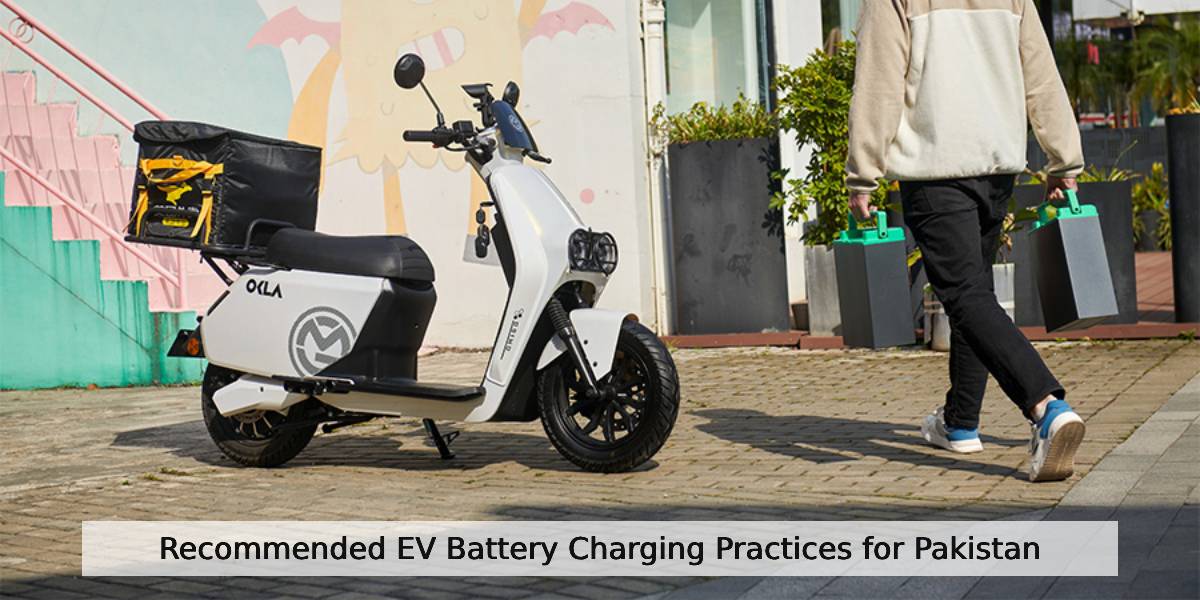
Here is a rundown of the best battery charging practices for electric vehicle use in Pakistan, with tips applicable for e-bikes and electric vehicles!
What To Do:
- Charge between 20% and 80% for daily use.
- When feasible, use slow charging for optimal battery health all the way around.
- Make sure your wall outlet and entire charging supply are grounded and surge-protected.
- Charge when electricity prices are at their lowest for you during off-peak hours of the day and night.
- Regularly inspect the charger cables and connectors each time you charge to ensure they are not fraying or damaged from wear and tear.
What Not To Do:
- Don’t charge your batteries in direct sunlight or unreasonably hot or cold ambient conditions.
- Don’t use unverified chargers or homemade/inexpensive local knockoffs that you can buy.
- Don’t use the battery until it is completely drained.
- Don’t fast charge your batteries every day, if you can help it.
- Don’t keep your batteries at 100% charge if you don’t need to be in that state of charge for something functional.
Charging Styles: Slow vs. Fast vs. Smart Charging for Ev Bikes
| Type | Charging Time | Battery Effects | Best For |
|---|---|---|---|
| Slow Charging | 4–8 hours | Low stress prolongs battery life (and is also inexpensive). | Use it in your home on a daily basis. |
| Fast Charging | 1–2 hours | High heat, faster battery degradation, and expensive. | Use it in your travels and emergencies. |
| Smart Charging | Variable time with adaptive charging options – slows down at ≥80% to not heat the battery. | Great current balance; cheap to run option since low current charging uses less power. | Always the best option for home systems, it helps with battery life. |
Based on research, using fast charging frequently causes faster degradation than slow charging, as it increases internal resistance in the battery. For everyday users, the most feasible and battery-positive charging option is an in-home EV charging station in Lahore or Islamabad.
EV Battery in the Summer Heat
In Pakistan’s summer, the sweat-inducing heat can exceed 45 degrees Celsius, and this affects your battery lifespan. Here is how the consumer can take mitigatory actions toward looking after their battery.
- Charge during cooler hours of the day (early morning or late evening).
- Try to avoid leaving your vehicle parked in the sun for long periods of time.
- Do not fast charge a hot battery.
- If able, use a smart charger with temperature sensors.
- Make sure your vents are clean to allow your cooling system to operate properly.
If you have an OKLA electro-scooter, please refer to the OKLA battery maintenance guide to maintain optimal performance in extreme heat.
Smart EV Charging Systems in Pakistan
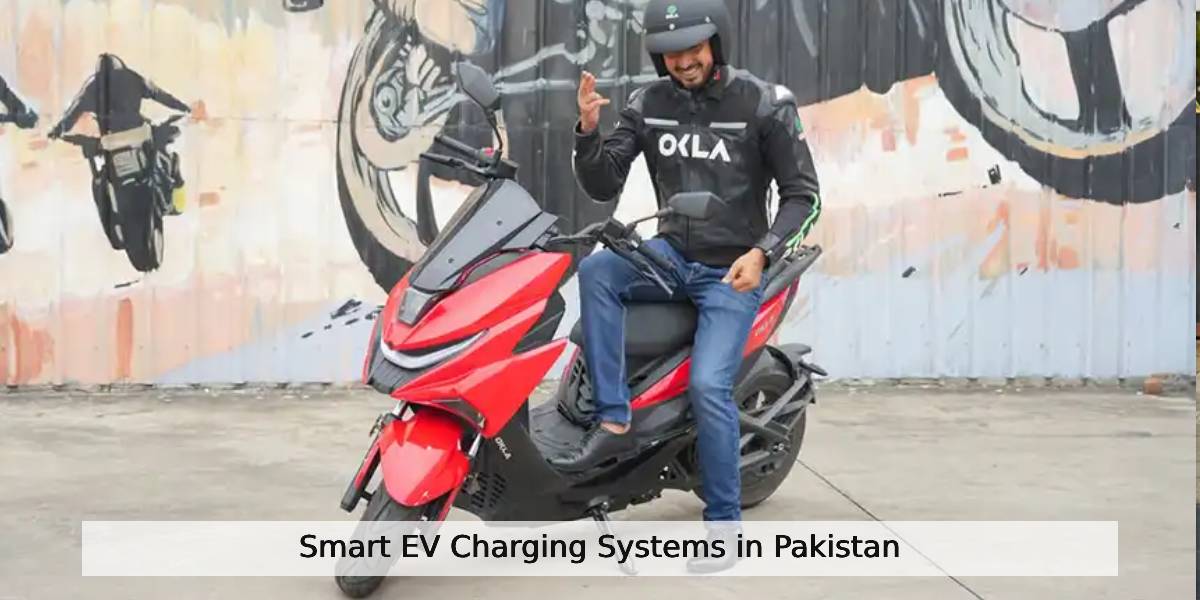
The new smart EV charging system in Pakistan offers values like:
- Real-time monitoring is still in apps
- Changeable current options of slow or fast charging
- Adjustable current levels for fast or slow charging
- Protection against voltage spikes
Alternatively, systems can be connected to solar panels to give an environmentally friendly charge to the customer. These systems are more commonly available at Lahore, Islamabad and Karachi’s EV charging stations.
Tips for Reducing Electric Bike Charging Costs
If you charge your e-bike daily, the costs can add up quickly. There are several ways to increase team efficiency to reduce costs, including:
- Try charging when the costs are lower (off-peak).
- Use efficient chargers.
- Ensure your tire pressure is set correctly to avoid the added energy loss.
- Don’t carry too much weight: lighter e-bikes use less energy.
- Consider a solar-powered option for the home, since it will have a long-term cost benefit.
Battery lifespan and replacement
| Battery Type | Average Life | Replacement Cost (PKR) | Notes |
|---|---|---|---|
| Lead-acid | 2–3 years | 20,000–35,000 | Cheaper and shorter life |
| Lithium-ion | 4–6 years | 45,000–80,000 | The most common battery for e-bikes |
| Smart Li-ion | 6–8 years | 210,000–250,000 | Smart; better price, longer time |
If you follow good battery care and charging habits, you can nearly get double the time out of the e-bike batteries, saving thousands compared to replacement.
Geo Highlights: Evs’ Growing Presence In Major Cities Of Pakistan
| City | Highlights |
|---|---|
| Lahore | Significant growth of home-charged set-ups, the OKLA Experience center, and charging stations available to the public |
| Karachi | New outlets for e-bike battery services in Karachi have expanded the charging available to its citizens |
| Islamabad | Launch of smart electric vehicle charging stations backed by the government |
| Multan & Faisalabad | Local dealers moving towards solar-based charging stations |
The propagation of infrastructure brought on by the Pakistan EV Policy 2026 creates opportunities for drivers and riders to enjoy eco-friendly charging behaviors that benefit their wallets and the environment.
Conclusion
The future of transport is electric, but the sustainability in that future revolves around how we charge, repair, and look after our EV batteries. Whether you are commuting to work on your electric bicycle or going on a long-distance trip in your EV, “smart” charging leads to cleaner air for all, longer battery life for your EV battery, and lower costs for all.